
By Dr. Leandro Pucci, DCN, CNS, CKNS, LDN
A few peptides have strong human evidence for improving metabolic health. Most of the peptides discussed online do not. The difference matters, because the patients who benefit most from peptide therapy are the ones who use it to amplify a metabolic foundation that is already in place, not to replace one.
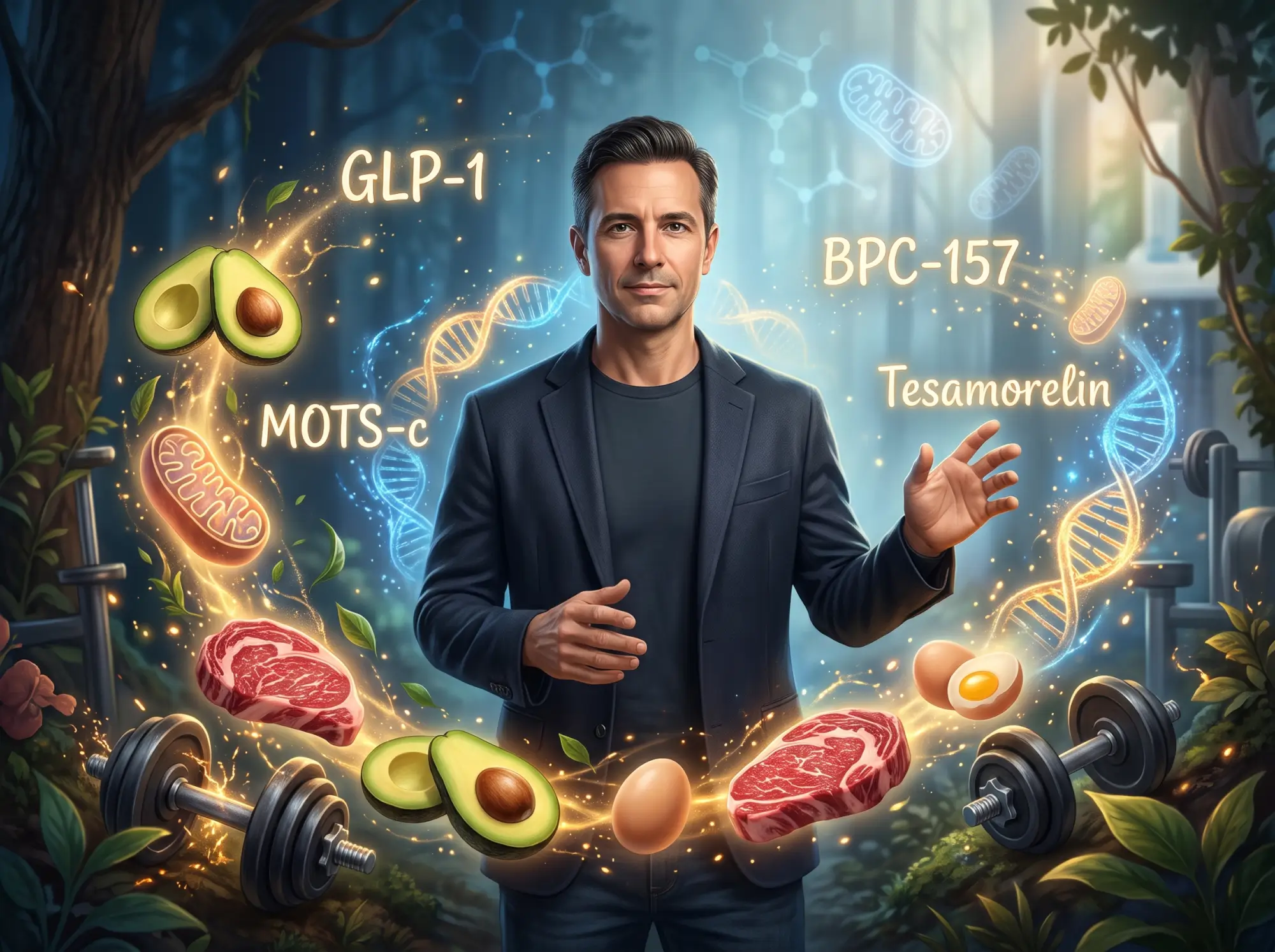
In my practice, peptide questions have gone from occasional to weekly. Patients arrive having read about semaglutide, BPC-157, or MOTS-c, often in the same sentence, as if they belonged to the same category of evidence. They don't. This guide explains what peptides are, how they act on metabolism, which ones have been tested in well-designed human trials, and where they belong in a root-cause plan.
Peptides are short chains of amino acids, the same building blocks that make up dietary protein. FDA regulations treat chains longer than 40 amino acids as proteins, so most therapeutic peptides sit below that size. Your body already makes thousands of them. Glucagon-like peptide-1 (GLP-1), ghrelin, and glucagon are all peptides that help regulate hunger, blood sugar, and fuel use every day.
Peptides work as messengers. Each one binds a specific receptor on the surface of a cell and triggers a defined response inside it. That specificity is why peptide drugs tend to have narrower side-effect profiles than many small-molecule drugs (1).
The limitation is durability. Native GLP-1 is cleared from the bloodstream within minutes, broken down by the enzyme DPP-4 (2). Much of modern peptide engineering is about extending that lifespan. Semaglutide, for example, is modified to bind albumin in the blood, which stretches its half-life to about a week and allows once-weekly dosing.
Eating collagen or whey does not deliver intact signaling peptides to your tissues; digestion breaks them into amino acids and small fragments. Therapeutic peptides are given by injection, or in specially engineered oral forms, precisely to avoid that. They are also not anabolic steroids. Some peptides act on hormone axes (growth hormone, for instance), but they signal the body's own glands rather than replacing the hormone directly.
Metabolic peptides act on three levers: appetite and glucose control, body composition through the growth hormone axis, and energy signaling inside muscle cells. A fourth group, the tissue-repair peptides, is often marketed for metabolic health but was studied for something else.
Incretin receptor agonists, such as semaglutide and tirzepatide, target appetite, blood sugar, and body weight. They are supported by large randomized clinical trials, including studies showing cardiovascular benefits. These medications are FDA-approved, although compounded versions are now sharply restricted.
GHRH analogs, such as tesamorelin, target visceral fat, or fat stored around the abdominal organs. Randomized clinical trials have demonstrated benefits in people with HIV-associated abdominal fat. Tesamorelin is FDA-approved for this specific indication, while other uses are considered off-label.
Growth hormone secretagogues, including CJC-1295 and ipamorelin, stimulate the release of growth hormone and IGF-1. However, human evidence remains limited to small, short-term studies. These substances are not included on the list of ingredients pharmacies may legally compound.
Mitochondrial-derived peptides, such as MOTS-c, are being studied for their potential to improve insulin sensitivity in muscle. Current evidence is primarily from animal studies, with no controlled human outcome trials. Although FDA advisers voted 7–5 in favor of allowing compounding, the FDA has not taken action.
Tissue-repair peptides, including BPC-157 and TB-500, are marketed for potential benefits involving gut health, tendon recovery, and wound healing. However, most supporting research comes from animal studies rather than human clinical trials. FDA advisers voted 8–6 in favor of allowing compounding, but the FDA has not taken action.
In the STEP 1 trial, adults with obesity lost an average of 14.9% of body weight over 68 weeks on semaglutide 2.4 mg, compared with 2.4% on placebo (3). In SURMOUNT-1, tirzepatide produced mean losses of up to 20.9% at 72 weeks (4). The SELECT trial went further, showing a 20% reduction in heart attack, stroke, and cardiovascular death in people with established heart disease and overweight (5). No other peptide class comes close to this depth of evidence.
The same trials also show what happens without a foundation. In STEP 4, participants who switched from semaglutide to placebo regained 6.9% of body weight within 48 weeks (6). In the STEP 1 extension, people regained about two-thirds of their lost weight in the year after stopping, and most cardiometabolic improvements drifted back toward baseline (7). The drug changed the signal; it did not change the system.
In adults with HIV and excess abdominal fat, tesamorelin reduced visceral fat by 15.2% over 26 weeks while placebo increased it by 5.0%. Triglycerides fell by 50 mg/dL, and fasting glucose did not worsen (8). A later trial in the same population cut liver fat by 37% relative to baseline (9). These are meaningful results, but they come from one population. Extending them to otherwise healthy adults with belly fat is a reasonable hypothesis, not a demonstrated outcome.
MOTS-c prevented diet-induced obesity and insulin resistance in mice (10). That is a compelling mechanism, and it has not yet been confirmed in controlled human trials. BPC-157 and TB-500 rest almost entirely on rodent studies, most from a small number of laboratories.
In July 2026, FDA staff reviewers recommended against allowing pharmacies to compound seven of these peptides, citing limited evidence. The agency's advisory committee voted narrowly in favor of six of them anyway, including BPC-157, TB-500, and MOTS-c (11, 12). Those votes are advisory. They are not drug approvals, and they say nothing about effectiveness for the off-label uses most people buy these peptides for.
I sequence peptide therapy the way I sequence any intervention: data first, foundation second, amplification third.
The practical difference is in what happens if the peptide stops. A patient who has rebuilt muscle, normalized fasting insulin, and stabilized eating patterns is in a far better position to keep those gains. A patient who used the peptide in place of those changes usually does not.
The regulatory picture changed several times this year, and it is still moving. As of late October 2026:
If you are considering a peptide, ask four questions. Is there human trial evidence for the outcome I care about? Is the product made by a state-licensed pharmacy for me specifically? Who is monitoring my labs and side effects? And what is the plan for stopping?
Which peptides have the best evidence for weight loss and insulin resistance?
GLP-1 receptor agonists such as semaglutide, and the dual agonist tirzepatide, have the strongest human evidence, including large randomized trials and cardiovascular outcome data. Tesamorelin has good trial evidence for reducing visceral fat, but only in adults with HIV.
Is BPC-157 FDA-approved?
No. In July 2026 an FDA advisory committee voted 8 to 6 to recommend allowing pharmacies to compound it for ulcerative colitis. That vote is advisory, and the FDA has not yet acted on it. BPC-157 has no approved medical use in the United States.
Do peptides work without changing my diet?
GLP-1 medications produce weight loss on their own, but trials show most of it returns after stopping, along with the metabolic improvements. Nutrition, resistance training, and sleep are what make results durable.
Can I use peptides on a low-carb diet?
Yes, with attention to protein. Appetite-suppressing peptides combined with a low-carbohydrate diet can push total intake very low, which increases the risk of muscle loss. Protein targets and resistance training need to be set deliberately.
How do I know if I'm a candidate for peptide therapy?
Start with labs and a structured foundation phase. If specific markers have not responded, a peptide may be worth discussing with a prescriber. My article on peptide candidacy covers this step by step.
Ready to look at your metabolic data? If you want a plan that starts with your labs and builds a foundation before adding peptides, book a discovery call or learn more about my metabolic health programs.
This article is for educational purposes and is not medical advice. Peptide therapies require evaluation and prescription by a licensed clinician.
References
Regulatory status verified October 25, 2026. Re-check before publishing if the FDA issues its interim peptide policy or finalizes the GLP-1 compounding proposal.