By Dr. Leandro Pucci, DCN, CNS, CKNS, LDN
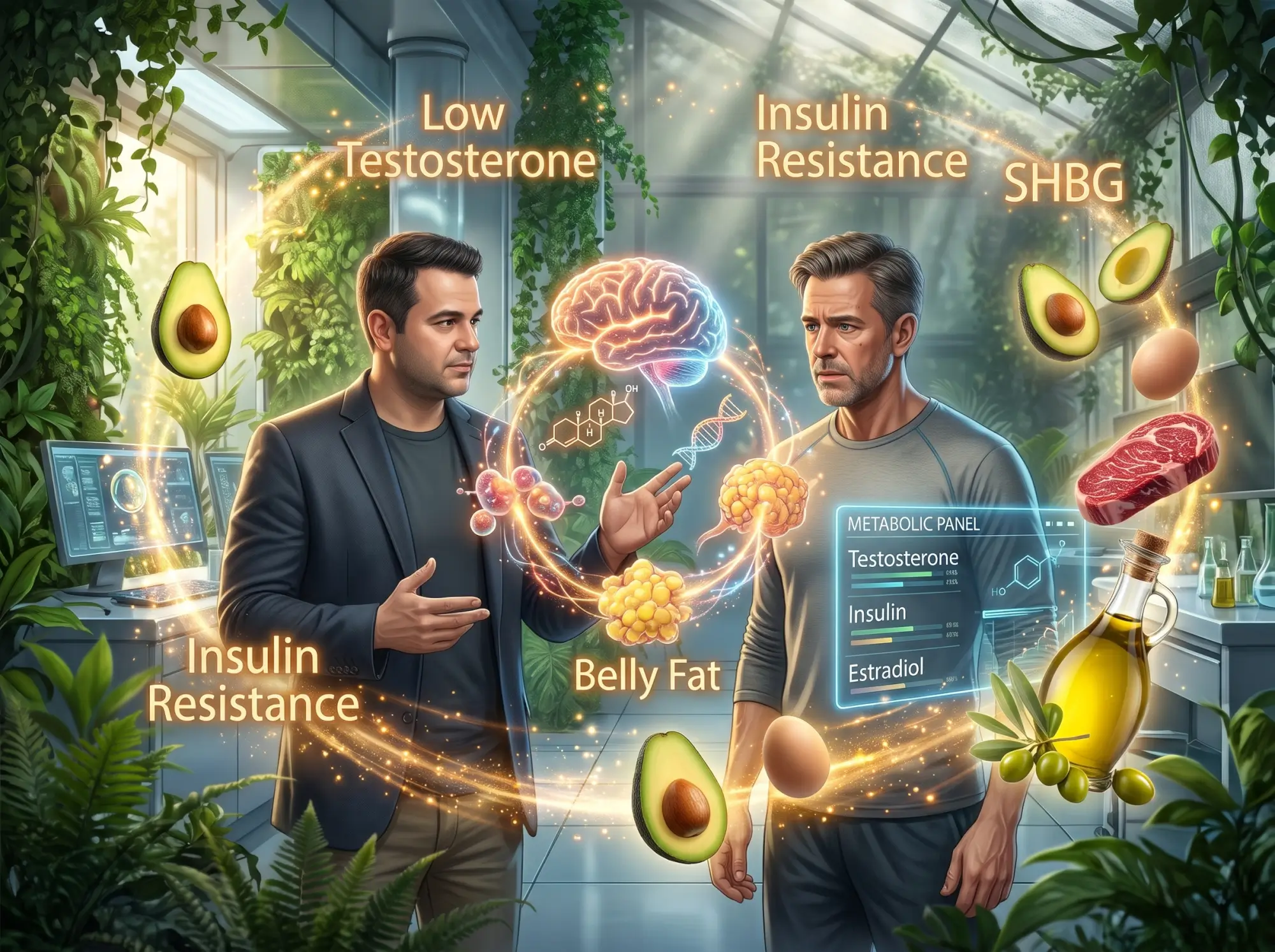
In men, abdominal fat and low testosterone feed each other. Visceral fat and insulin resistance suppress testosterone production; low testosterone makes it easier to gain visceral fat and harder to keep muscle. The encouraging part is that the loop runs both ways. Weight loss, strength training, adequate sleep, and a diet that improves insulin sensitivity reliably raise testosterone in men whose levels are low for metabolic reasons.
Men often come to me after noticing that the energy, drive, and recovery they had in their twenties are gone, and that their waistline is growing even though their habits haven't changed much. Sometimes the first question is about testosterone therapy. It is a reasonable question, but it usually comes before the more important one: why is testosterone low?
The relationship between testosterone and metabolism is strong and consistent. In a meta-analysis of observational studies, men with higher testosterone had a 42% lower risk of type 2 diabetes (1). Men with lower insulin sensitivity tend to have lower testosterone and lower mitochondrial capacity in muscle (2).
Several mechanisms link the two:
The loop is self-reinforcing, which explains why it often accelerates in a man's late 30s and 40s.
A single afternoon total testosterone is one of the most common sources of confusion I see. Testosterone peaks in the morning, drops after meals, and is suppressed by acute illness, poor sleep, and heavy training.
The Endocrine Society recommends diagnosing low testosterone only when symptoms are present and morning fasting total testosterone is low on at least two separate occasions (3). A useful panel includes:
Total testosterone, measured in the morning while fasting and repeated twice, helps confirm whether testosterone levels are consistently low rather than reflecting a temporary fluctuation.
SHBG (sex hormone-binding globulin) and calculated free testosterone provide additional insight into available testosterone levels and help account for low SHBG, which can occur with insulin resistance.
LH and FSH help distinguish between secondary causes of low testosterone, related to brain signaling, and primary causes involving the testicles.
Estradiol helps assess estrogen levels and can reflect increased aromatization, a process in which testosterone is converted to estrogen in fat tissue.
Fasting insulin, glucose, HOMA-IR, and A1c help identify underlying metabolic issues that may contribute to low testosterone.
Prolactin, TSH, and ferritin help rule out other potential causes of low testosterone, including hormonal imbalances, thyroid conditions, and abnormal iron levels.
Finally, a complete blood count (CBC) and PSA (prostate-specific antigen) provide baseline safety information if testosterone therapy is being considered.
On this panel, the metabolic pattern usually looks like low or low-normal total testosterone, low SHBG, normal or low LH, higher estradiol, and elevated fasting insulin. That pattern responds well to the interventions below.
In a meta-analysis of 24 studies, weight loss raised total testosterone in men with obesity. A low-calorie diet raised it by about 83 ng/dL on average and bariatric surgery by about 252 ng/dL. The amount of weight lost was the strongest predictor of the rise, and estradiol fell as testosterone rose (4). This is the single most effective lever for metabolically driven low testosterone.
In healthy young men, one week of sleeping five hours a night lowered daytime testosterone by 10% to 15% (5). Sleep apnea, which is common in men with abdominal obesity, fragments sleep further and deserves screening when snoring, daytime fatigue, or high blood pressure are present.
A meta-analysis of intervention studies found that low-fat diets lowered total and free testosterone compared with higher-fat diets (6). This fits well with a lower-carbohydrate approach that includes whole-food fats such as olive oil, eggs, nuts, fish, and meat, while keeping protein adequate. The goal is not a high-fat diet for its own sake but enough fat to support hormone production while carbohydrate is matched to insulin sensitivity.
Resistance training builds the muscle that low testosterone erodes and improves insulin sensitivity directly. Two to four sessions a week with progressive loading is a practical target. Chronic overtraining with inadequate recovery and calories can lower testosterone, so more is not always better.
Regular heavy drinking suppresses testosterone and adds visceral fat. Chronic stress and elevated cortisol work against the same axis. Both are worth an honest assessment.
Testosterone therapy is appropriate for men with confirmed, symptomatic hypogonadism, and it can have real metabolic effects. In the T4DM trial, men aged 50 to 74 with abdominal obesity, low-normal testosterone, and prediabetes or early diabetes all joined a lifestyle program. After two years, 12% of those also given testosterone met criteria for type 2 diabetes, compared with 21% on placebo. The trade-off was that 22% of the testosterone group developed a hematocrit above 54%, compared with 1% on placebo (7).
Two practical points follow. First, therapy suppresses the body's own production and fertility, which matters for men who may want children. Second, if the cause is metabolic, therapy without addressing visceral fat, sleep, and insulin resistance treats the number but not the loop. In my practice, I work on the foundation first and coordinate with the patient's physician or urologist when therapy is being considered or is already in place.
Does belly fat lower testosterone?
Yes. Visceral fat converts testosterone to estradiol and produces signals that suppress the brain's stimulation of the testes. Insulin resistance also lowers SHBG, reducing total testosterone.
How much can weight loss raise testosterone?
In pooled studies, diet-based weight loss raised total testosterone by about 83 ng/dL on average, with larger increases in men who lost more weight. Bariatric surgery produced larger rises.
Can lack of sleep lower testosterone?
Yes. One week of five-hour nights lowered daytime testosterone by 10% to 15% in young men. Untreated sleep apnea is another common cause.
Is keto good for testosterone?
Low-fat diets tend to lower testosterone, and lower-carbohydrate diets that support weight loss and insulin sensitivity tend to help. The overall effect depends on weight loss, protein intake, and training.
Should I start TRT for low testosterone?
Only after low levels are confirmed on repeated morning tests with symptoms present, and ideally after addressing metabolic causes. Discuss fertility, hematocrit, and prostate monitoring with your physician.
Feeling the drop in energy and drive? I help men find the metabolic drivers behind low testosterone and build a plan that addresses them. Book a discovery call or learn more about performance and healthy aging.
This article is for educational purposes and is not medical advice.
References